Basement Kitchenette Build Cost Rough-In Guide USA
By the KitchenBath Guides Editorial Team — reviewed for accuracy. Last updated October 2026. This article is for informational purposes and reflects typical market pricing; consult licensed structural engineers and contractors for site-specific assessments.
The basement kitchenette prices the convenience layer: the wet-bar-to-full-kitchen range the below-grade scope serves, built on the rough-in plumbing the drainage question routes. The scope ladder is definable and the rough-in economics honest.
This guide prices basement kitchenette builds for 2026: the scope classes from wet-bar to apartment kitchen, the rough-in plumbing the drainage routes, and the fixture packages the classes carry.
Basement Kitchenette Build Cost Rough-In Guide — At a Glance for US
Basement kitchenettes run $4,000–$25,000 in 2026 — wet-bar scopes at $4,000–$9,000 (bar sink, mini-fridge, counter), mid-range kitchenettes at $8,000–$16,000 (full sink, appliances, counters), and apartment-class kitchens at $15,000–$25,000 (code-full, the suite scope). The rough-in plumbing (the drainage routing) prices $1,500–$5,000 by the gravity-versus-pump question the site serves. This is a realistic planning number for the United States in 2026, not a marketing low-ball.
| Line Item | Typical Range (USD) | What Drives It |
|---|---|---|
| Wet-bar scope (all-in) | $4,000–$9,000 | Bar sink, counter, mini-fridge class |
| Mid-range kitchenette | $8,000–$16,000 | Full sink, appliances, counters |
| Apartment-class kitchen | $15,000–$25,000 | The code-full suite scope |
| Rough-in plumbing (drainage routed) | $1,500–$5,000 | The gravity-or-pump core |
| Fixture and appliance packages | $1,500–$8,000 | By scope class |
Understanding Basement Kitchenette Build Cost Rough-In Guide
The scope ladder prices its classes: the wet-bar (bar sink, counter, refrigeration — the entertainment scope at $4,000–$9,000), the mid-range kitchenette (full sink, the appliance tier, real counters at $8,000–$16,000), and the apartment class (the code-full kitchen the secondary-suite scope demands at $15,000–$25,000). Each class carries its rough-in and fixture economics honestly.
The rough-in prices the drainage question: gravity connections where the site fall serves ($1,500–$3,000 — the below-grade drain the slope connects) and pump-served alternatives where it does not ($2,500–$5,000 — the upflush/ejector classes the gravity-less basement demands). The kitchenette plumbing concentrates at the sink line — the supply-and-drain the fixtures route; the drainage class the site decides prices the rough-in the scope rides.
What Moves the Price Up or Down
Kitchenette pricing moves on scope class, the drainage routing, and the fixture/appliance packages the classes carry.
| Factor | Cost Impact | Detail |
|---|---|---|
| Scope class (bar to apartment) | 11000 | 16000 |
| Drainage routing (gravity vs pump) | 1000 | 2500 |
| Appliance tier | 1500 | 6000 |
| Counter and cabinetry | 1500 | 5000 |
Kitchenette Scope Classes
The market prices honest classes:
| Option | Description | Best For | Cost Level |
|---|---|---|---|
| Wet-bar scope | Bar sink, counter, refrigeration | Entertainment basements | $4,000–$9,000 |
| Mid-range kitchenette | Full function, appliance tier | Family convenience, rentals-lite | $8,000–$16,000 |
| Apartment-class kitchen | Code-full, suite-served | Secondary suites, full rentals | $15,000–$25,000 |
The scope class prices the kitchen-ness the basement demands — bar to full function.
Three Realistic Project Scenarios
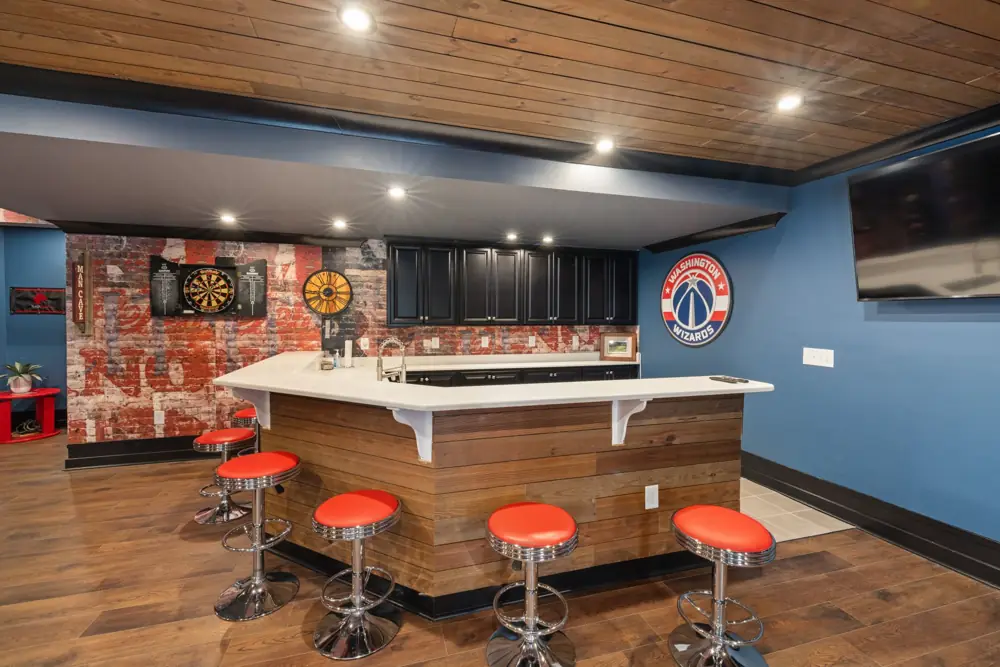
The wet-bar entertainment scope — $5,000–$8,500
A rec-room basement: bar sink, counter, beverage center.
- Wet-bar fixtures and counter — $2,500–$4,500
- Rough-in (gravity-served) — $1,500–$3,000
Why this matters: the wet-bar prices the entertainment — the convenience scope the rec room serves.
The family kitchenette — $10,000–$15,000
Full function: sink, appliances, real counters.
- Fixtures and appliances — $4,500–$7,000
- Counters and cabinetry — $3,000–$5,000
- Rough-in plumbing — $2,000–$3,500
Why this matters: the kitchenette prices the convenience — the full function the family basement demands.
The suite-class kitchen — $18,000–$24,000
The code-full apartment kitchen the rental scope carries.
- Full kitchen scope — $14,000–$19,000
- Code-compliant rough-in — $2,500–$4,500
Why this matters: the suite class prices the code — the full kitchen the rental documentation demands.
Scope comparisons price the kitchen-ness — the classes the basement use demands.
Sample Budget Breakdown
The table below shows how a typical mid-range budget for basement kitchenette build cost rough-in guide distributes across materials, labor and compliance in the United States. Adjust the percentages to your own scope before using it as a savings target.
| Category | Estimated Amount | Explanation | Optimization Tip |
|---|---|---|---|
| Rough-in plumbing | $1,500–$5,000 | the drainage core | The routing the site prices |
| Fixture and appliance packages | $1,500–$8,000 | by scope class | The equipment the classes carry |
| Counters and cabinetry | $1,500–$5,000 | the furniture layer | The surfaces the scope prices |
Every figure above is an indicative 2026 market range. Final quotes move with site conditions, contractor availability and the exact specification you lock in.
From Quote to Completion: the Typical Timeline
Most basement kitchenette build cost rough-in guide projects follow the same five-stage rhythm. Knowing the calendar before you sign prevents the two classic frustrations — feeling rushed into a deposit, and being surprised by a mid-project gap while materials arrive.
- Installation: 2-5 days — Interior systems install in days (perimeter cut, drain, sump, vapor management); exterior runs to 1-2 weeks with excavation and landscape.
- Week 4+: finishing phase — The waterproof basement earns its finishing scope — walls, floors, egress and the living space the water management protected.
- Week 0: water diagnosis — Where water enters and why — the inspection that determines everything after (source repair vs management vs both).
- Week 1-2: system quotes — Interior drainage, exterior excavation or combination — quotes compared on warranty scope and method honesty.
- Week 2-3: permits and prep — Plumbing and structural permits where scope triggers them; interior prep for the cut-and-drain work.
Smart Ways to Control the Budget
Cost control on basement kitchenette build cost rough-in guide is mostly about scope discipline and timing. These are the strategies that consistently deliver the largest savings:
Interior systems for symptom management, exterior for cause
Interior drainage manages water that arrives; exterior waterproofing stops it arriving — price the diagnosis (where water enters) before the method.
Advantages:
- Directly reduces the controllable parts of the quote
- No impact on quality or compliance when scoped correctly
Disadvantages:
- Exterior excavation prices 2-4x interior systems and carries the landscape repair on top.
- Requires planning lead-time you may not have on urgent timelines
Bundle the egress window with the finish project
Egress windows priced inside a finishing project share the mobilization, cutting and drywall — standalone installs carry full setup costs twice.
Advantages:
- Directly reduces the controllable parts of the quote
- No impact on quality or compliance when scoped correctly
Disadvantages:
- Requires planning the bedroom layout before the finishing scope locks.
- Requires planning lead-time you may not have on urgent timelines
Compare waterproofing on warranty length and scope
Transferable lifetime warranties on interior systems are the market standard — read what they cover (the system) versus what they imply (the whole basement).
Advantages:
- Directly reduces the controllable parts of the quote
- No impact on quality or compliance when scoped correctly
Disadvantages:
- Warranty documents are written by the companies they protect.
- Requires planning lead-time you may not have on urgent timelines
Dehumidify as a system, not an appliance
Permanent dehumidifiers with drainage ($1,200-2,500) outperform portable units on the humidity math — the finishing project that includes one prices its air honestly.
Advantages:
- Directly reduces the controllable parts of the quote
- No impact on quality or compliance when scoped correctly
Disadvantages:
- Portable units are cheaper upfront and quietly lose the humidity battle at the meter.
- Requires planning lead-time you may not have on urgent timelines
Permits, Rules and Safety
Kitchenettes permit through the plumbing-and-building scope they carry — the drainage connections, the electrical circuits, the ventilation the cooking classes demand. The apartment-class kitchens ride the full secondary-suite compliance the rental scope prices.
- Waterproofing scope permits where plumbing and structural cutting occur; interior drainage systems usually coordinate through the finishing permits they serve.
- The egress window is code-required for sleeping rooms and permit-inspected — the escape-route dimension the resale inspection verifies.
- Basement finishing triggers permit stacks (egress, ceiling height, electrical, plumbing) — the legal-bedroom question rides the egress requirement specifically.
Maintenance and Long-Term Ownership Costs
The project price is only the first line of the budget. These recurring items are what owners in the United States actually spend money on after the crews leave:
| Task | Frequency | Typical Cost | Why It Matters |
|---|---|---|---|
| Egress window hardware and wells | Yearly | DIY (free) | The escape route that must open — hardware lubricated, wells drained, the function the code wrote for. |
| Sump pump test | Quarterly | DIY (free) | Pour-and-observe testing catches the failed pump before the storm does — the 10-minute habit that protects the whole system. |
| Dehumidifier maintenance | Monthly filter, yearly service | DIY (free) | The humidity management that keeps the finished basement finished — filters and drainage paths checked. |
| Interior drainage outlet inspection | Yearly | DIY (free) | Clean water paths from the interior system to the sump — the check that keeps the perimeter drain draining. |
Kitchenette maintenance prices the drainage dependency (the pump classes the mechanical calendar the gravity lines skip) and the appliance packages the scope carried. The scope the install chose prices the maintenance it earns — honestly, both routes.
Frequently Asked Questions
How much does a basement kitchenette cost?
$4,000–$25,000 by scope class in 2026 — wet-bars at $4,000–$9,000, mid-range kitchenettes at $8,000–$16,000, apartment-class kitchens at $15,000–$25,000 with the rough-in plumbing (the drainage routing) pricing $1,500–$5,000.
Can you put a kitchen in a basement?
Yes — by scope: wet-bars anywhere plumbing serves; kitchenettes where the drainage routes; apartment kitchens where the code the secondary suites demand carries the compliance. The scope the use demands prices the kitchen-ness honestly.
How does basement kitchen drainage work?
Gravity where the fall serves (the drain the slope connects below the fixtures) or pump-served where it does not (the upflush/ejector classes the gravity-less site demands) — the routing the rough-in prices at $1,500–$5,000.
Does a basement kitchenette add value?
Wet-bar and kitchenette scopes add the convenience value the family basements demand; apartment-class kitchens add the rental value the suite compliance unlocks — the scope the value the documentation counts.
Summary
Planning basement kitchenette build cost rough-in guide in the United States starts with an honest range — $4,000–$25,000 for the scenarios most households actually install — then works backwards through scope-class selection on the drainage routing.
The basement kitchenette prices its kitchen-ness: bar, kitchenette, apartment — the classes the basement use demands. Route the drainage the site offers (gravity or pump), price the fixtures the scope carries, and the convenience layer the below-grade space earns delivers the function the class documented. Collect at least three itemised quotes, confirm the permit path before signing, and hold a 10–15% contingency for site surprises. Those three habits protect more budget than any product choice.
Related Guides
- Basement Wall Panels vs Drywall Cost Comparison Canada
- Basement Leak Crack Injection Repair Cost Ontario
- Basement Floor Lowering Dig Out Cost Melbourne
- Walkout Basement Excavation Cost Sloped Lot USA
- Interior Basement Wall Insulation Rigid Foam Cost UK
- Crawl Space Encapsulation vs Waterproofing Cost USA